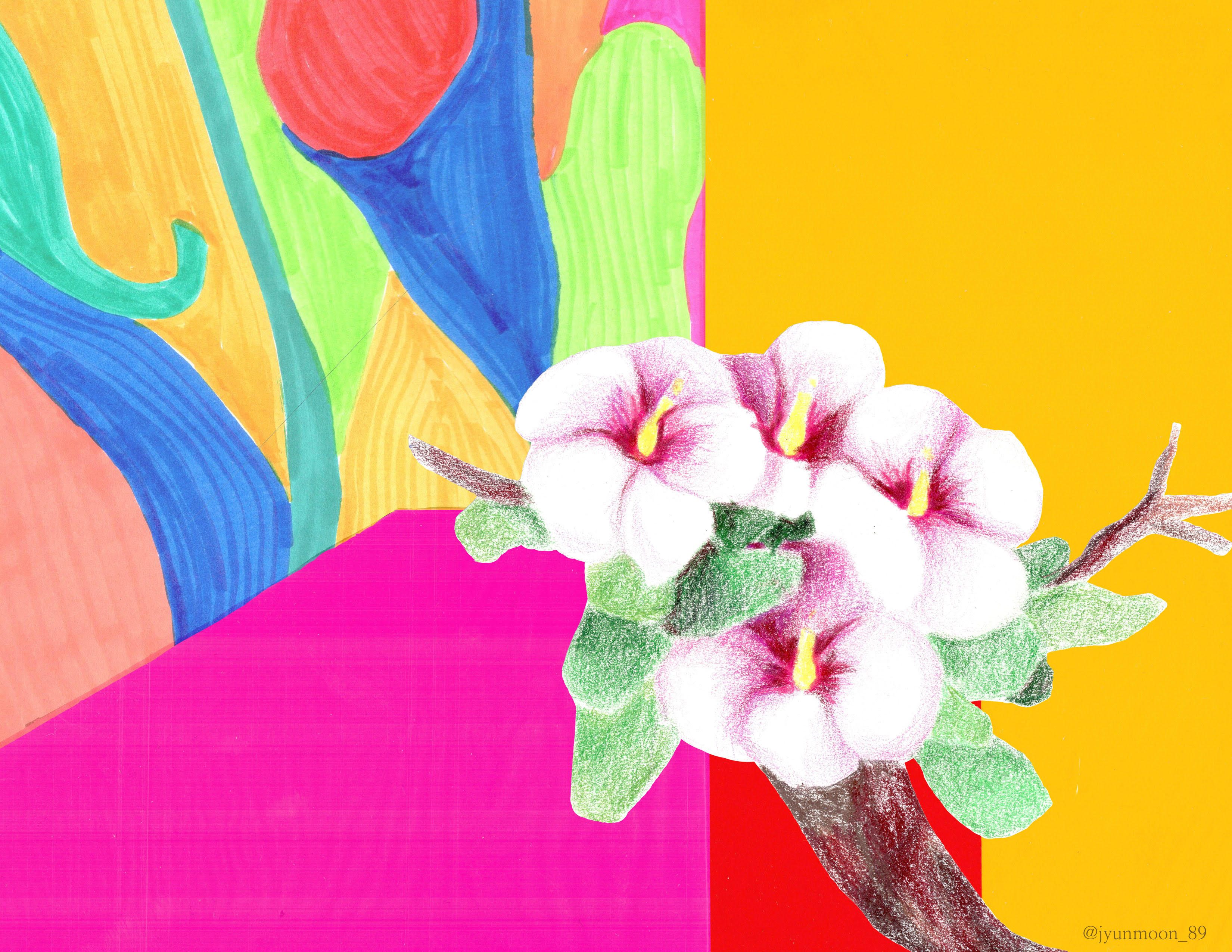
I decided to take a Korean language class to improve my Korean speaking skills. My fluency in the language is comparable to a customer service operator but I wanted to be able to speak better in my mother tongue, a language and culture that has undeniably shaped who I am. I couldn’t be more surprised by how this class informed me of my own limitations and expectations. I am relieved to admit I am not perfect in Korean but it doesn’t mean I prefer English either. I have difficulty navigating the cultural expectations of my Korean heritage because I choose not to follow norms that are intrinsically informed by a patriarchal system of values and customs. By resisting to. conform, I, in some ways, am perceived at not having noonchi. My class was a diverse group of students whose racial background was not all Korean. Because of this fact, the social expectations couldn’t be assumed and had to be re-articulated. Through this re-articulation, my interest was reinvigorated in the Korean language and culture and accepting in myself my Korean identity including my evolving hyphenated identity as Asian American.
-Guest Contributor
Published by Ajumma Power!
We are a collective of five Korean Americans who mostly identify as women. This blog is created over passing conversations about our everyday experiences navigating a White and patriarchal world.
The literal definition of ajumma is a woman that has children and/or is married. This word in Korean conjures images of middle-aged, unrefined, working class women. Ajummas are loud, unapologetic, unattractive, obnoxious, pushy, and don't take shit from anyone. We reclaim this word in acknowledgement that ajummas are badass and powerful. Ajummas sustain domestic life, serve as the backbone of society and make the world go round.
In this blog, we plan to share our lived experiences and assert our voices to take charge of our full humanity.
Kashina (she/her/they/them) is a stay-at-home mom to a baby activist and an educator at heart. She strives to create spaces for Yellow American storytelling.
My Sassy Girl (she/her) is an ENFJ, ennegram 7, and social worker. She demands to have the same default respect as a 6 foot tall white man as a 5’ 1” (every inch counts) tall Asian woman.
Poetic Warrior
My pronouns are they/them/she/her. They/them feel more like myself, but I use she/her in solidarity of the histories of women’s fights. I am assigned female at birth, Korean immigrant, and proud to call myself iban, which means queer in Korean.
YP (she/ her/ hers) is an artist and educator aiming to uplift queer immigrant, POC communities
View more posts